
Postnatal Body Restore: The First 3 Months
An easy to follow online course to help your body recover following childbirth
Designed by a UK Physiotherapist for the first 3 months postnatal, you will be equipped with the knowledge to help your body recover well from pregnancy and childbirth. Learn simple, actionable strategies to prevent or improve symptoms of incontinence, prolapse, back and pelvic pain. Feel confident with how to help your diastasis heal, improve the appearance of your tummy and how to exercise safely with a diastasis. Understand when it's safe to return to sex and how to improve comfort. Know HOW to return to exercise safely so you can apply the principles to any exercise or activity that you enjoy. Finally, understand where to go for help if things aren't progressing the way you hoped. All with careful consideration of how exhausting and busy life as a new mum really is.
You will have 12 month's access to:
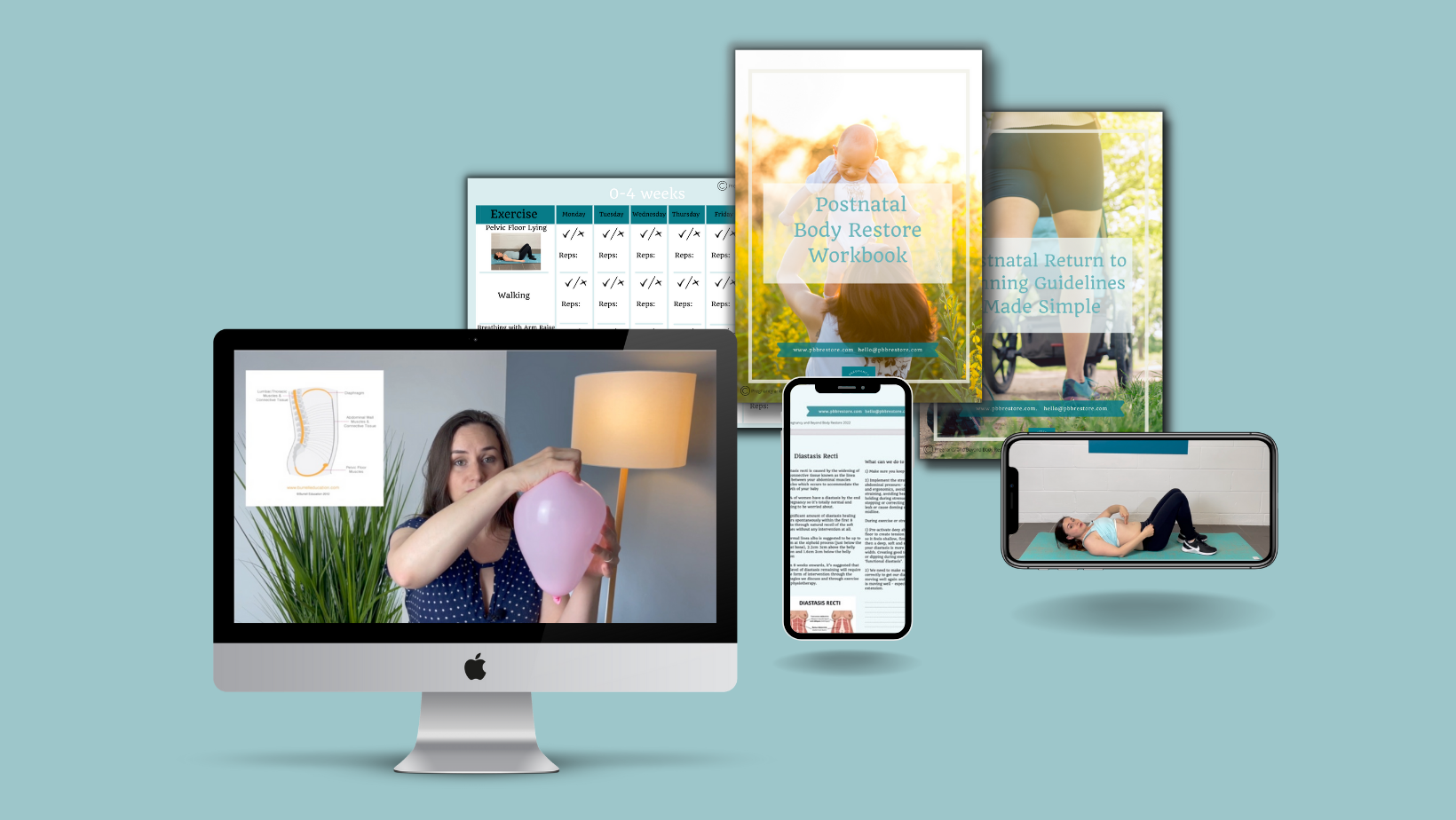
Over 3 hours of bitesize educational videos, exercises and ergonomic strategies which can be accessed on your phone, ipad or computer
PDF downloadable example exercise programme from 0-11+ weeks
PDF downloadable workbook
Access to to the Postnatal Body Restore Facebook Community
*BONUS* PDF Postnatal return to running guidelines made simple
The Follow-Up All New Mothers Need
This course is like having a personal physio on your phone. Hazel has done a fantastic job building a course to help Mothers’ bodies recover from birth with content that is not otherwise spoken about by Midwives or NCT. This course answered questions I didn’t know I had!
Victoria Bodeker
We believe it's a woman's right to know how to help their bodies recover well and return to good function after having their baby so we want to make this course as accessible and affordable as possible.
Extensive follow along workouts are not provided as part of the course as we believe everyone should work at their own pace doing the exercise they enjoy.
We do not offer individual advice as part of this course. We believe face to face assessments are more appropriate if you are struggling with ongoing symptoms of pelvic floor dysfunction (incontinence/prolapse), aches, pains or diastasis.